Web-based tool makes it easier to design advanced materials
A new tool offers researchers a better way of exploring and understanding catalyst data.
TSUKUBA, Japan, Feb 2, 2026 - (ACN Newswire) - Modern industry relies heavily on catalysts, which are substances that speed up chemical reactions. They’re vital in everything from manufacturing household chemicals to generating clean energy or recycling waste. However, designing new catalysts is challenging because their performance is affected by many interacting factors.
A new tool uses a catalyst gene profiling, where catalysts are represented as symbolic sequences, making it easier for scientists to interpret data and design catalysts without a need for programming skills.
A new tool developed by researchers at Hokkaido University, published in Science and Technology of Advanced Materials: Methods, will simplify the process by providing researchers with a way to easily view and explore data about catalysts, enabling them to identify patterns and relationships in catalyst datasets without needing advanced programming or computational skills.
The tool takes advantage of an approach known as catalyst gene profiling, where catalysts are represented as symbolic sequences. This makes it easier for scientists to interpret the data and apply sequence-based analysis methods to design and improve catalysts. The tool itself is a web-based graphical interface that offers an intuitive and interactive way to investigate these catalyst profiles.
“The system enables researchers to explore complex catalyst datasets, identify global trends, and recognize local features—all without requiring advanced programming skills,” explains Professor Keisuke Takahashi, who led the study. “By visualizing both the relationships among catalysts and the underlying gene-based features, the platform makes catalyst design more interpretable, accessible, and efficient, bridging the gap between data-driven analysis and practical experimental insight.”
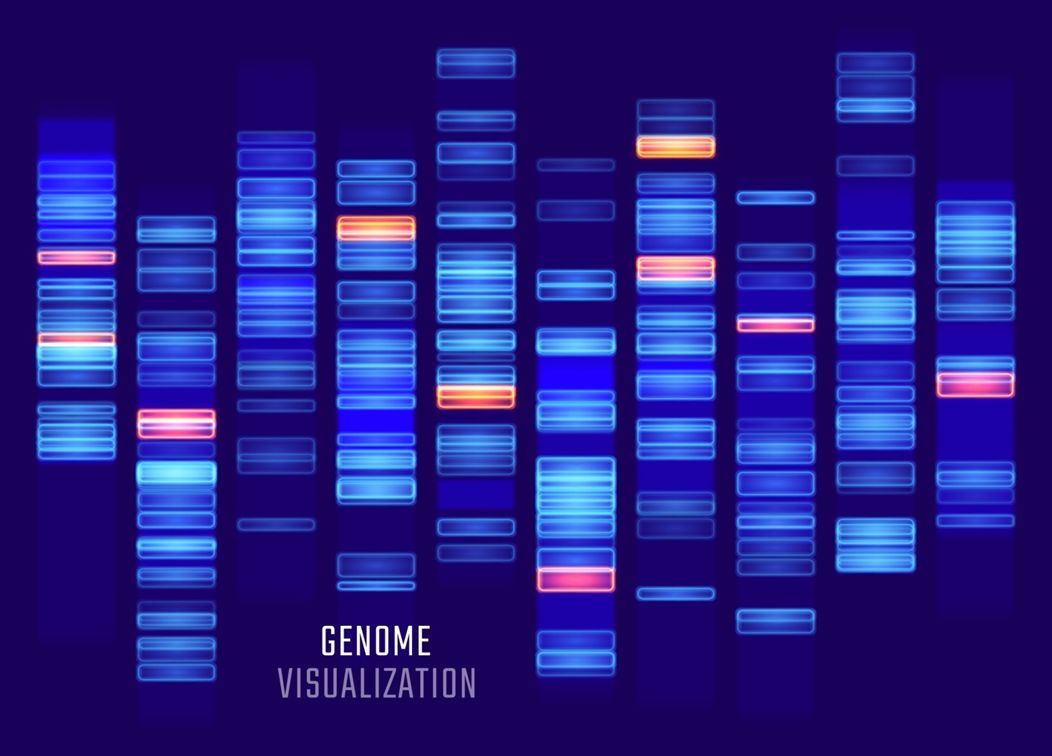
Users can view catalysts clustered together based on how similar their features are or how similar their sequences are. The tool also includes a heat map that offers insights into how the catalyst gene sequences are calculated. The different visualizations can be viewed side by side and are synchronized so they all update simultaneously when a user zooms in or selects a group of catalysts.
The team plans to extend the tool to work with other material science datasets so it can be used more broadly in the field. They’re also working to include a predictive component. Integrating modeling and editing strategies would mean researchers could use the tool not only to explore existing catalysts but also to investigate new ideas for high-performance materials. In addition, they want to improve the tool’s collaborative features so that several researchers can work together to explore and annotate datasets, enabling a community-oriented, data-driven approach to material design and discovery.
“Our goal is to make advanced materials research more intuitive, approachable, and impactful,” says Takahashi.
About Science and Technology of Advanced Materials: Methods (STAM-M)
STAM Methods is an open access sister journal of Science and Technology of Advanced Materials (STAM), and focuses on emergent methods and tools for improving and/or accelerating materials developments, such as methodology, apparatus, instrumentation, modeling, high-through put data collection, materials/process informatics, databases, and programming. https://www.tandfonline.com/STAM-M